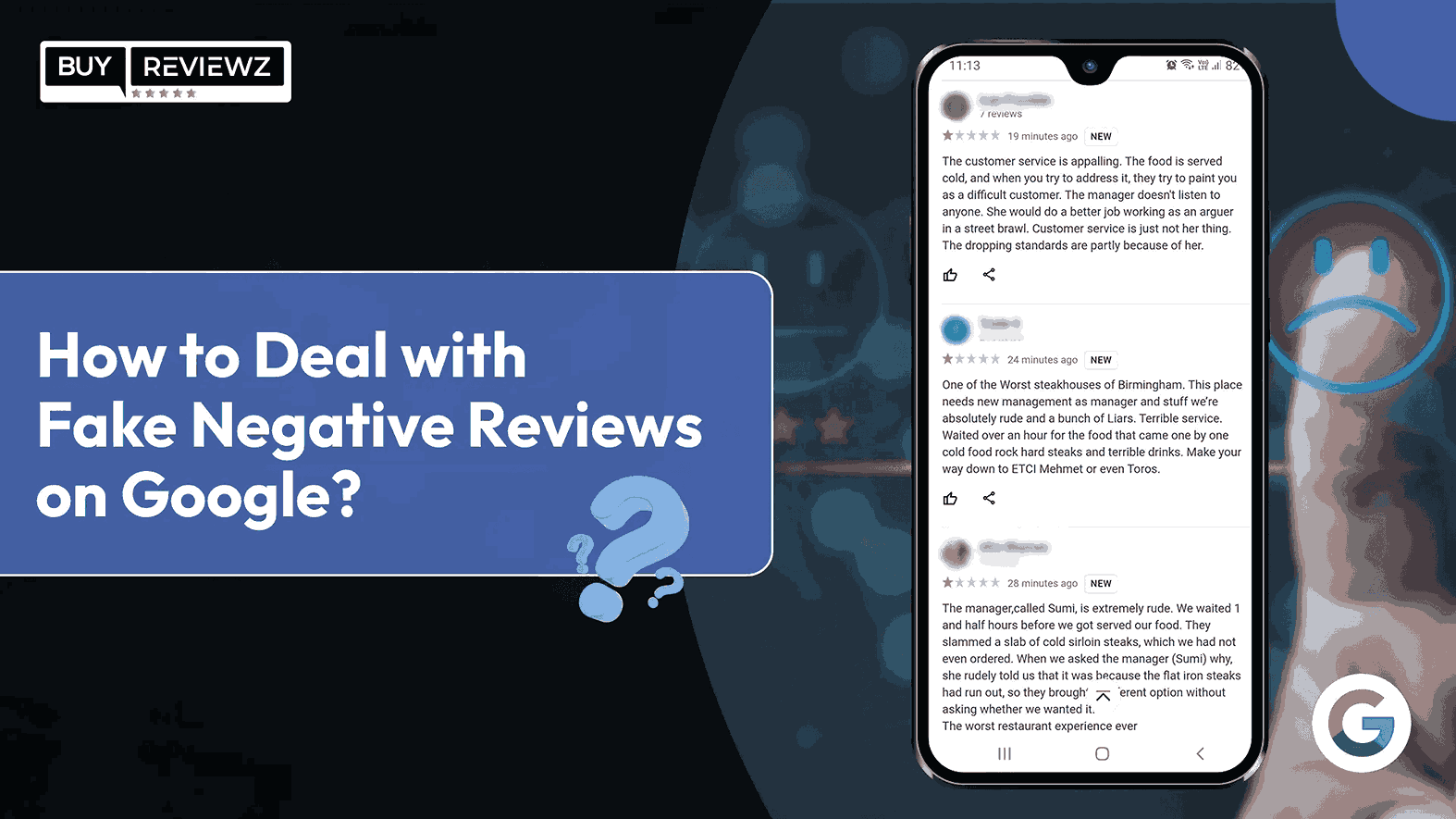
None of these signs proves on its own that a review is fake, but together they can show a pattern, and they help you describe the problem when you report it.
#1. Be attentive to the detailing of the review -
A fake review often contains nothing that matches your business: no product, service, date or place you recognise, or details that can't be true, such as a service you don't offer or a visit on a day you were closed. Vagueness alone proves little, because genuine customers write vague reviews too, but details that your records contradict are worth noting.
#2. Check the frequency of the reviews by the reviewer -
Look at timing. Google's policy names "unusual volumes or patterns of review contributions" as a sign of rating manipulation, so a burst of similar negative reviews in a short time, especially from new profiles, is worth noting.
Note the dates and the wording as well. Several reviews posted on the same day in similar words can be one person using several accounts, which Google's policy counts as fake engagement.
#3. Check your own records -
Search your bookings, orders, calls and messages for the reviewer's name and for the visit they describe. If you find nothing, write that down, but treat it as one clue rather than proof: as explained above, a missing record doesn't show that someone never dealt with you.
#4. Watch if a reviewer is reviewing for other businesses -
Select the reviewer's name to open their profile. If their contributions are public, you'll see their other reviews. Reviews of other businesses prove nothing on their own, but a reviewer who praises a direct competitor while attacking you, or who seems connected to one, may have a conflict of interest, which Google's policy doesn't allow.
#5. Keep an eye on the reviewer's name and profile icon -
The name and profile picture can be a clue. A profile with no picture, no other reviews and a generic name can be a throwaway account, but plenty of genuine customers have profiles like that too.
Compare the name and picture with your records and your staff list. Sometimes they point to a competitor, a former employee or someone else with a conflict of interest, which Google's policy doesn't allow.
#6. Keep a record of what you find -
Before you reply or report, save what you have: a screenshot of the review with its date, the reviewer's profile, and anything in your records that contradicts the review, such as a booking calendar showing you were closed. A dated record helps you choose the right reason when you report the review and, if Google turns the report down, when you appeal. Keep customer details out of anything you post publicly.
Why Is It Significant To Spot A Fake Google Review?
Identifying fake negative reviews on Google is crucial since they can seriously harm your business's sales and reputation online by misleading prospective clients and portraying an inaccurate image of your business in people's eyes.
It also tells you which reviews are worth reporting and which to answer instead. Google's help page on reporting reviews says: "You can report any review, but only those that violate Google policies are eligible for removal." So reporting is for a review that breaks a policy, such as fake engagement, a conflict of interest, spam or harassment, not for one you simply disagree with.
A Step-By-Step Guide To Report A Fake Google Review
So many questions arise with fake reviews, like how can you respond to fake Google reviews? Is it possible to delete those negative reviews?
The short answer: you can't delete a review yourself. You can report it, and Google removes it if it finds that the review violates its policies. If it doesn't, the review stays up, so reply to it as well.
Here is how to report a review from your Business Profile:
Step 1: Match the review to a policy
Using the signs above, decide which part of Google's policy the review breaks: for example, it isn't based on a real experience, it comes from a competitor or a former employee, it is spam, or it contains harassment or someone's personal information. If a review doesn't break a policy, Google won't remove it, however unfair it feels.
Step 2: Go to your Business Profile
Sign in to the Google account that manages your Business Profile, then select Read reviews.
Step 3: Select Report next to the review
Find the review in the list and select Report next to it.
Step 4: Choose the reason
Select the reason that matches the policy the review breaks. Google gives "Spam" and "Profanity" as examples.
Step 5: Send the report
Select Send report. Google's help page says review evaluation typically takes several days, and that you can check the status of your report in the Reviews Management Tool (see below).
Step 6: Reply to the review
Reply whether or not you report it: the review stays up while Google evaluates it, and it stays up if Google finds no violation, unless it is removed later, for example after a successful appeal. Keep the reply short and polite, say you can't find a record of the visit if that's the case, and invite the reviewer to contact you. Don't call the review fake or name the person you suspect: other customers read your reply, and an accusation you can't prove reflects on you.
You can also report a review, and follow up on it, in Google's Reviews Management Tool.
How To Report A Fake Review In The Reviews Management Tool
Follow the steps below to report a fake review on Google:
Step 1: Open the Reviews Management Tool
Go to the Reviews Management Tool. If the email address shown is the one associated with your Business Profile, select Confirm; if not, select Switch account.
Step 2: Choose your business from the given list
Select your business, then select Continue.
Step 3: Report a new review, or check one you reported
Choose "Report a new review for removal" to flag a review, or "Check the status of a review I reported previously and appeal options" to follow one up, and select Continue.
A reported review shows one of these statuses: "Decision pending" (flagged, but not evaluated yet), "Report reviewed - no policy violation" (evaluated, and no violation found), or "Escalated - check your email for updates" (an appeal has been escalated, and Google will email you the final decision).
Step 4: Select Report next to the review
When you report a new review, the tool lists your reviews. Select Report next to the one you want to flag.
Step 5: Choose the reason and submit
In the new tab, select the reason to flag the review, then select Submit.
Step 6: If you disagree with the decision, appeal once
If the status shows "Report reviewed - no policy violation" and you think Google got it wrong, you can submit a one-time appeal from the same tool. Our guide on how to remove bad Google reviews walks through the appeal step by step.
How To Respond To Fake Reviews On Google?
Google typically takes several days to evaluate a report, so reply in the meantime. First, check whether you can find the reviewer in your records. If you can't, say so without calling the review fake, for example: "We can't find a record of your visit, and we'd like to understand what happened. Please contact us at [phone or email]." A missing record isn't proof, and a public accusation you can't back up looks worse to the people reading it than the review does.
However, it would help if you considered below pointers before responding to fake reviews on Google:
1. Respond politely
Receiving a fake review can be frustrating, but always try to maintain your politeness on the Google platform while responding to the review, as the review is public and your target audience is reading.
2. Prompt response is appreciated
Respond promptly, so that people who read the review also see your side of it before they decide.
3. Correct false statements with facts, not accusations
If the review states something you can show is wrong, such as a service you don't offer or a day you were closed, correct it calmly with that fact. Don't post customer details, internal records or a guess about who wrote the review.
3 Tips To Deal With Fake Reviews On Google
Here are 3 tips to deal with fake reviews on Google:
1. Report the review once, for the policy it breaks
If the fake review goes against Google's policies, report it with the reason that fits. Before reporting a review, make sure you have read the policies.
Google removes a review when it finds a policy violation, so asking other people to flag the same review isn't a substitute for a clear reason. Don't ask staff, friends or family to post positive reviews to outweigh it either: Google's policy counts content based on a conflict of interest, such as employment or a family relationship, as rating manipulation.
2. Follow the report up, and appeal once if Google turns it down
Check the report's status in the Reviews Management Tool. If it comes back "Report reviewed - no policy violation" and you disagree, submit the one-time appeal described above. On 15 October 2026, a Google employee posted in the Business Profile community that, because of a high volume of review appeals, processing times are currently extended and Google can't give a timeframe for pending cases. The same post asks you not to submit a duplicate appeal.
3. Keep asking every customer for reviews
A single fake review weighs less among many genuine ones, so keep asking every customer the same way, with nothing offered in return. Google's policy doesn't allow incentives for reviews, and it doesn't allow asking only the customers you expect to be happy.
If you believe a review violates the law or your rights, that is a legal question rather than a policy one, and the answer depends on where you are. Google has a separate process to report content for legal reasons, and it asks you to flag the content in the product first. A lawyer can tell you whether it applies to you.
Bottom Line
Fake reviews are frustrating, but the response is the same each time: keep a record, reply calmly, and report the review for the specific policy it breaks. Only report a review you believe breaks Google's policies, and don't flag one just because it points out a shortcoming in your service.
A genuine bad review can still be useful: it shows you what to fix. Put the problem right for the customer because it's the right thing to do, not in exchange for the review. Google's policy doesn't allow offering anything, such as a discount or a free service, for revising or removing a negative review.
In any case, reply to your reviews, negative ones included, because people choosing a business read the replies too. The next time a negative review arrives, read it carefully first: answer it if it describes a real experience, and report it only if it breaks a policy.
FAQs
#1. What are the challenges with negative or fake reviews on Google?
Reviewers can use any name, so you often can't tell who wrote a review, and the fact that you can't find someone in your records doesn't show that they never dealt with you. Google removes a review only when it breaks a policy, for example because it isn't based on a real experience, so describe what you found rather than only saying "this wasn't a customer".
#2. Can you remove the review on Google on your own?
No. A business can't delete a review from its profile. You can report it, and Google removes it if it violates Google's policies.
A review that only gives a low star rating, or criticizes you respectfully, doesn't break those policies: Google's policy allows "content that describes negative experiences in a respectful manner."
#3. What if the Google team doesn't remove the fake review?
If your report comes back as "Report reviewed - no policy violation" and you disagree, you can submit a one-time appeal in the Reviews Management Tool, and Google will email you the result. If the review stays up, reply to it politely and professionally, so readers see your side.
#4. Is it possible to purchase fake Google reviews?
Google's policy doesn't allow it: its list of fake engagement includes "Reviews or ratings that have been paid for, directly or in kind." Doing so can also damage the business's reputation online.
#5. What steps will Google take if I purchase fake Google reviews?
Google's policy says fake engagement "is not allowed and will be removed." It also says that if a Google Maps user's behavior harms its users, community, employees or ecosystem, Google may take actions ranging from suspending account privileges to account termination.
#6. Can the business page owner delete negative or fake reviews?
No, the business page owner can not delete negative or fake reviews. You can ask Google to remove it, but read the Google Reviews policy before requesting that a review be removed or deleted.
#7. How do I remove 1 star rated Google review?
You can't remove it yourself, and a 1-star rating on its own doesn't break Google's policies. If the review does break one, report it: on your Business Profile, select Read reviews, select Report next to the review, choose the reason and send the report. Google removes it only if it finds a violation.
#8. How can I protect myself from a fake review on Google?
You can't stop someone from posting a review, but you can check new reviews regularly, keep a record of anything suspicious, and report a review that breaks a policy. To report one in the Reviews Management Tool:
- Go to the Reviews Management Tool.
- If the email address shown is the one associated with your Business Profile, select Confirm.
- Select your business, then Continue.
- Select Report a new review for removal, then Continue.
- Select Report next to the review you want to flag.
- In the new tab, select the reason, then select Submit.